Buzzing News Vol. 10
February 19th, 2026A week in the life of Babylonstoren’s VIP garden workers, by our resident beekeeper and entomologist, Arné Stander.
Overview
The past weeks have been quite hot. Summer got off to a blistering start in November, earlier than previous years. It was quite an exciting time with the bees as we introduced honeybee swarms to the observation hives. This was both challenging and fun!
Our Byzantium has been up and running, and open to visitors since November, and we are receiving positive feedback. Some families have visited the Byzantium more than once, as the children absolutely adore it. Curtley and Nikita, the Byzantium assistants, are wonderful and they are familiar with the entire exhibition, aiding guests during their visit. The flow of the bee workshops is better thanks to the wonderful new dressing room, the exhibition itself, and the restrooms. The air conditioning is also pleasant, especially after the practical sessions.
This is a very long report about what has happened this far. However, I hope you enjoy reading it. I am covering the observation hives here, because I want to share my experience which can help anyone in the future. I will also explain what is happening in the apiaries this time of year.
Byzantium Observation Hives
The Byzantium has three different observation hives, making it quite intriguing: Woven Skep hive, Log hive, and Top-bar hive. The latter is considered the easiest hive to establish.
Top-bar hive
The reason for this was the temporary hive which was made to transfer a swarm over from one of my Langstroth hives, containing the custom-made frames which I inserted into the hive. I just had to wait for the bees to expand onto these frames. Then I simply transferred the swarm over to the hive in the Byzantium. I did this at nighttime, making sure that I transferred all the bees, including the field bees, over to this hive.
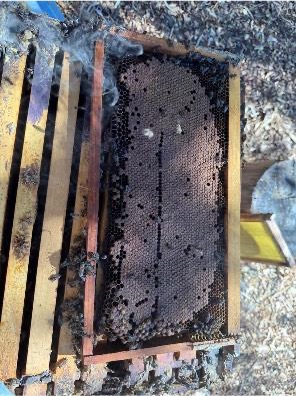
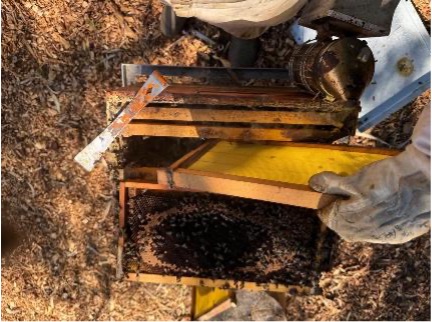
After I transferred the swarm, I used the temporary hive again to transfer another swarm over from a Langstroth hive. I call this my “helping swarm”. The idea is that this swarm will help expand on the custom-made frames of the observation hive. As they build comb on these frames, I will transfer them over to the observation hive. The two photos below show the empty Langstroth hive after I transferred the swarm to the temporary hive. The two blue arrows indicate the custom-made frames, positioned on the sides of the brood comb.
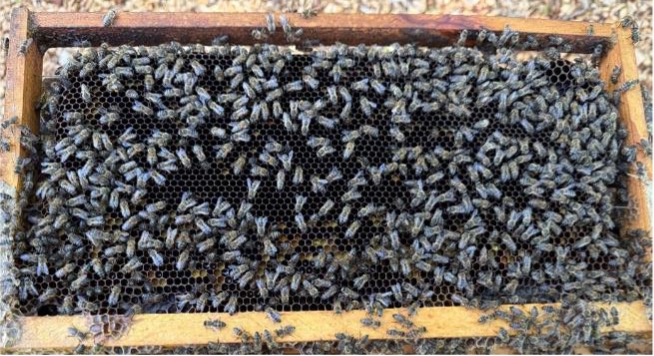
Back at the observation hive, I simply transferred the frames, with the two custom-made frames hanging in front, followed by the wooden frames of the Langstroth hive. The end goal is to work the Langstroth frames out, keeping only the custom-made frames. That is why the “helping swarm” could reduce the waiting time.
The previous photo shows the progress made to the custom-made frames. Even a week makes a significant difference to the progress. A very good sign indeed. The blue circle shows newly constructed comb.
Woven skep hive
This skep hive was created by Klaas van der Wal. I built a small balcony for landing space in front of the entrance using propolis. The challenge was to get a swarm in with combs hanging from the roof. I used thin wooden dowels which I was able to stick through the walls of the hive into combs, to keep the combs in a hanging position.
First things first — I had to select a swarm from my apiary and transfer them to the skep. I originally transferred this swarm from a wastebin at the Babylonstoren koppie to this Langstroth hive.
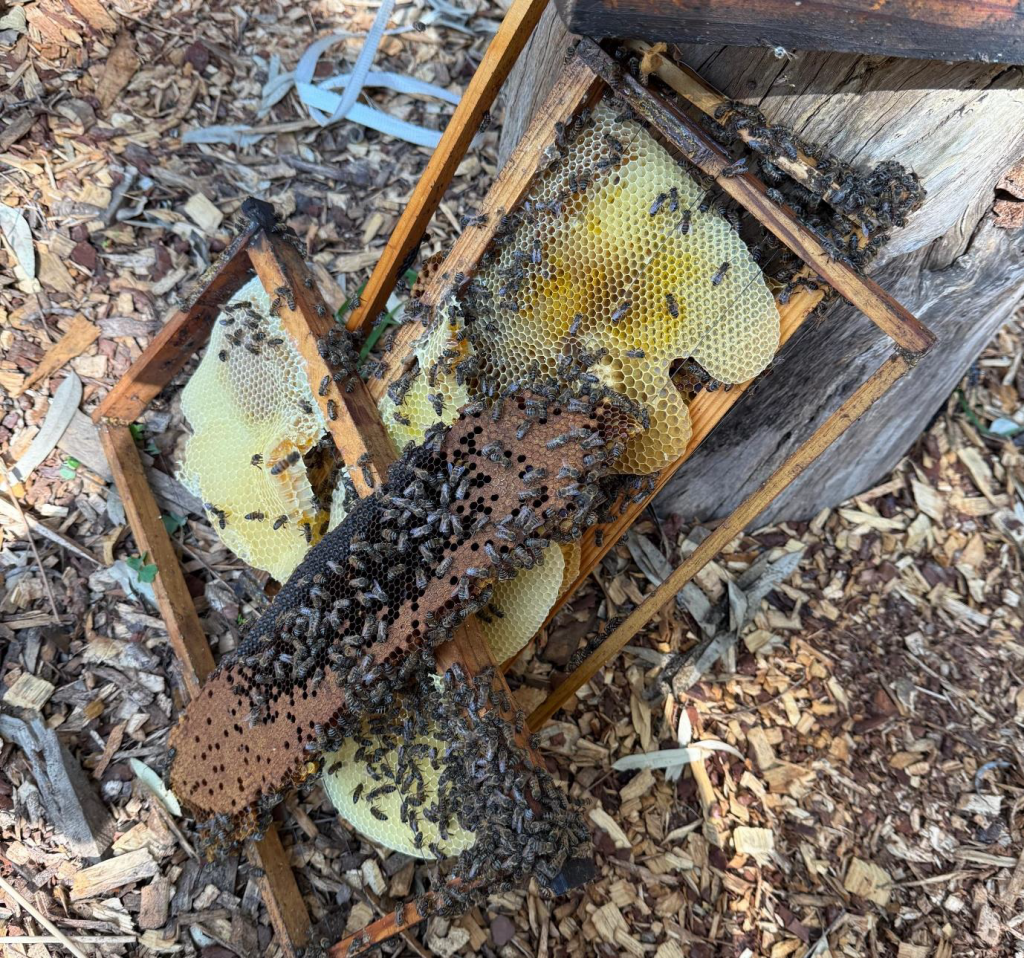
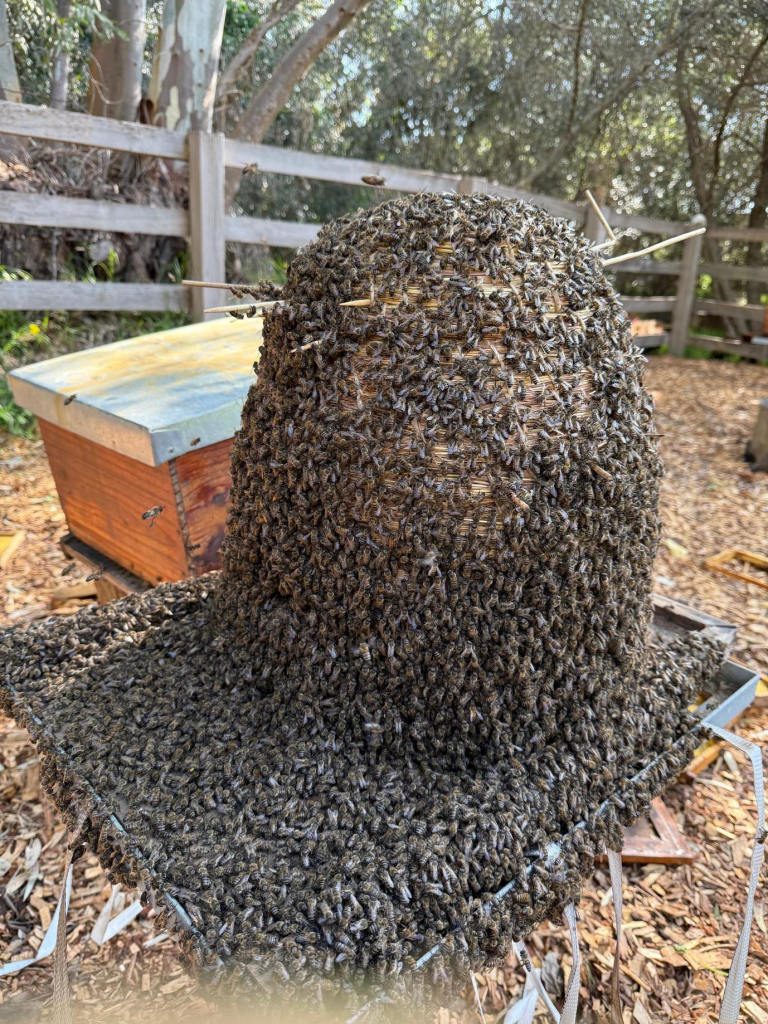
I had to cut the brood comb so that they could fit inside the skep. The dowels were inserted through the walls and through the length of the wax combs. This was quite tricky, but I managed to get the combs hanging. Next, I placed the skep in the position where the hive was standing, so that the field bees could return to the skep.
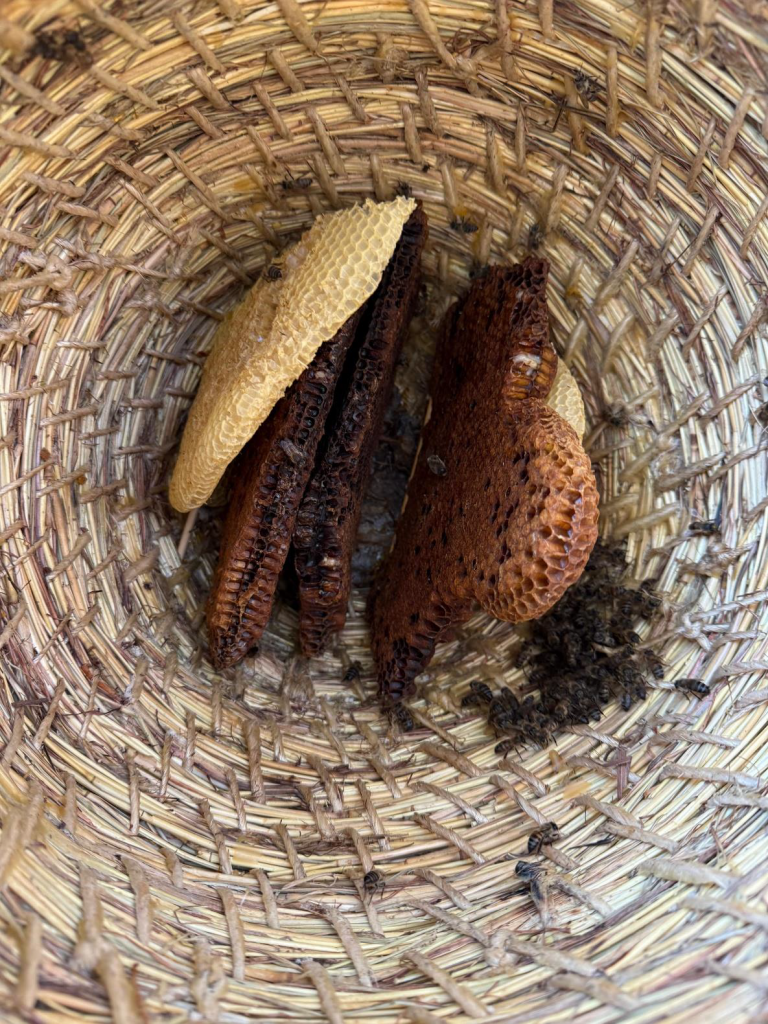
The swarm covered the entire skep. I kept the dowels and did not cut them short immediately. I knew the combs were hanging, but I did not want to put any tension on them.
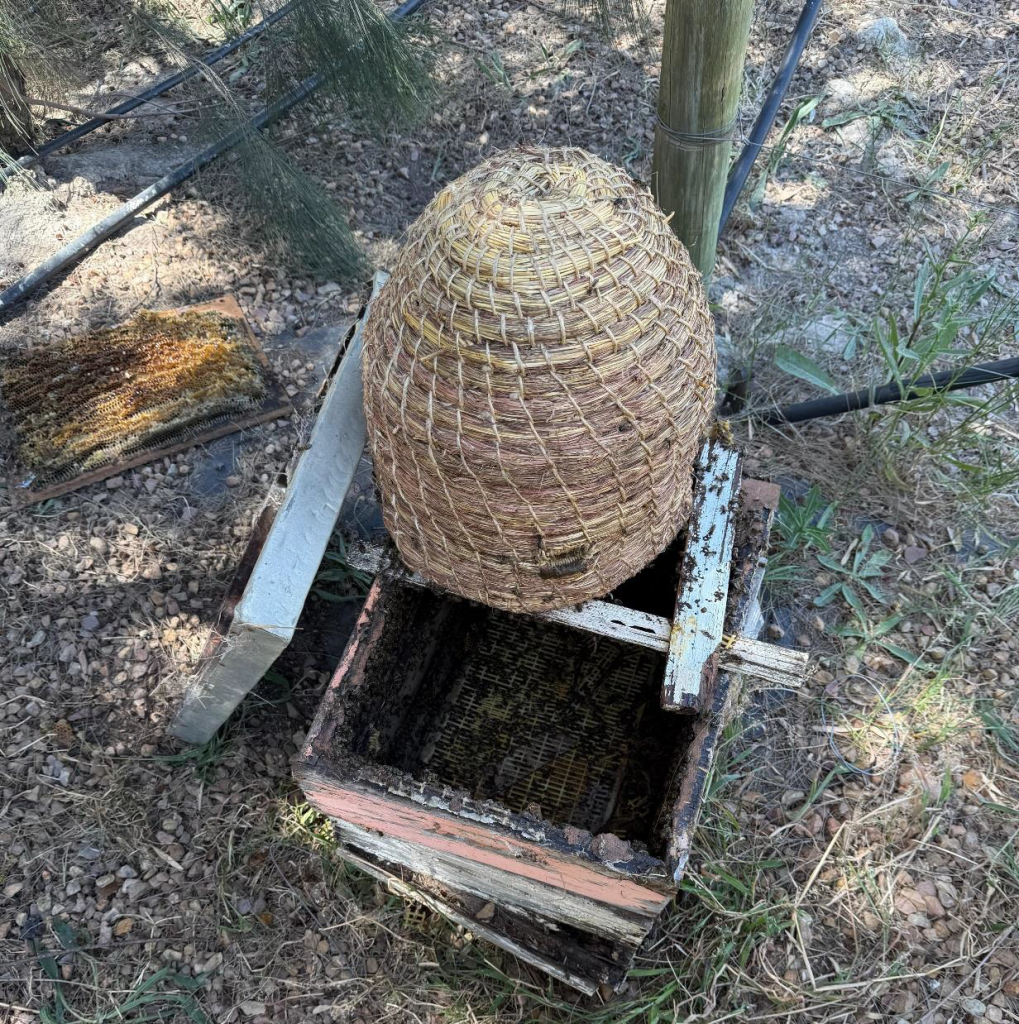
Back at the Byzantium, the swarm did well initially. However, after a few weeks the activity seemed to decline. At certain times we thought the swarm had absconded. Eventually, that turned out to be the case. I think the amount of comb inside the skep was insufficient for the swarm to function. Therefore, with the second attempt, I knew I had to add more comb. Luckily, I found a swarm on Rietvlei. The swarm was inside an old Langstroth hive. A few years ago, I transferred a swarm from this old and broken hive into a new hive. After the transfer I kept the old hive there. With the remaining propolis, it attracted a moving swarm. There were no frames inside. Thus, I knew it would be much easier to cut combs, without any wires in my way.
This time, I inserted the dowels through the width of the combs. The operation was relatively quick. I went back the next morning to check and saw two pieces of comb which had broken through the dowels and fallen. Gravity, and the additional weight of all the bees on the comb, was against me.
I had to improvise. I used old pieces of irrigation pipes and fitted them at the bottom of the skep, preventing the combs from moving in a vertical direction. I also used short pipes as spacers between the hanging combs. It looks rather strange, but it really worked.
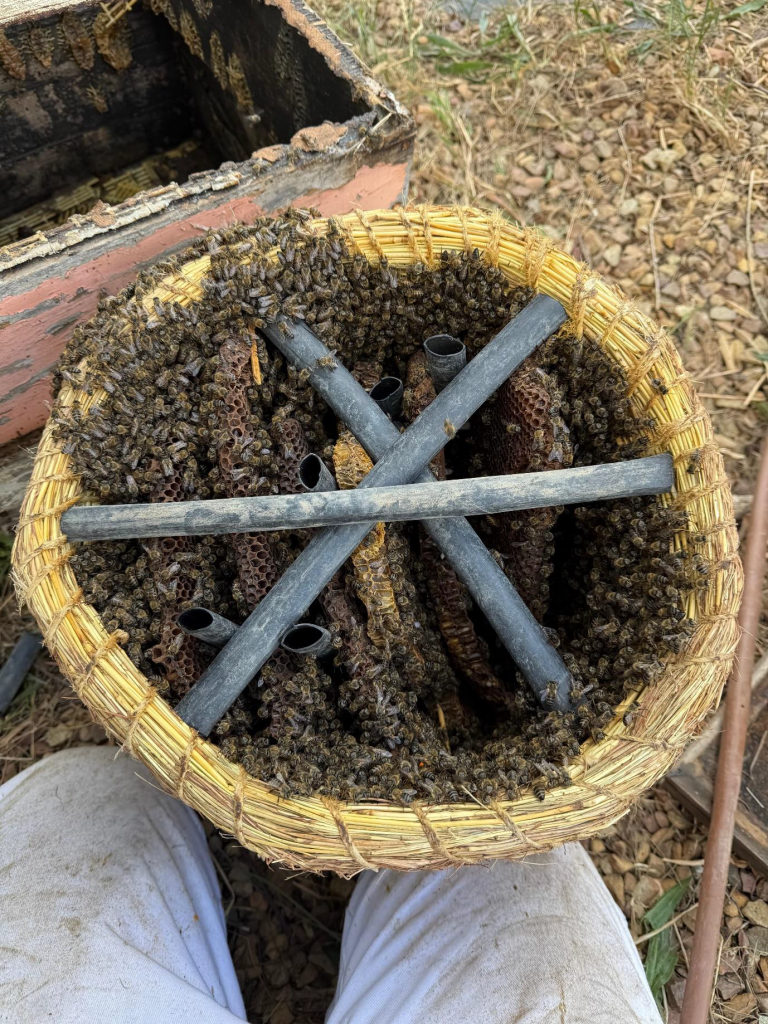
I placed the skep back on the platform and waited for two weeks before taking it to the Byzantium. I wanted to make sure that the combs were attached to the walls and ceiling of the skep. Bees use propolis to do this and it can take anything from a few days to a week. I wanted to be absolutely sure that no combs would come loose during transportation. It was worth the wait, and I safely brought the skep to the Byzantium one night. At the Byzantium, I had to tilt the skep onto one side, very carefully, to remove all the pipes. It was a beautiful picture seeing all the combs intact. I placed it back on the platform and inside the Byzantium.
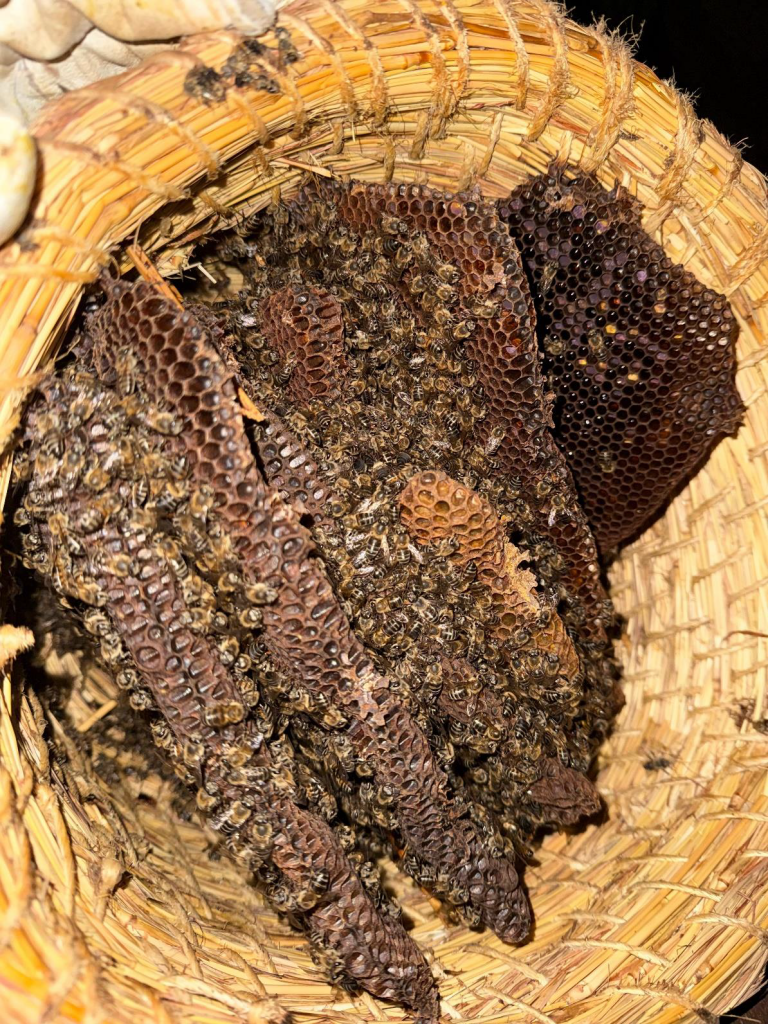
The next morning, I was curious to see how the swarm was doing. The level of activity was good. I gave them a wild olive branch at the entrance openings, as a new landmark, helping them to find their way in and out. It can take the bees a few days to get used to the new entrance to the hive. Thereafter, the branch can be removed.
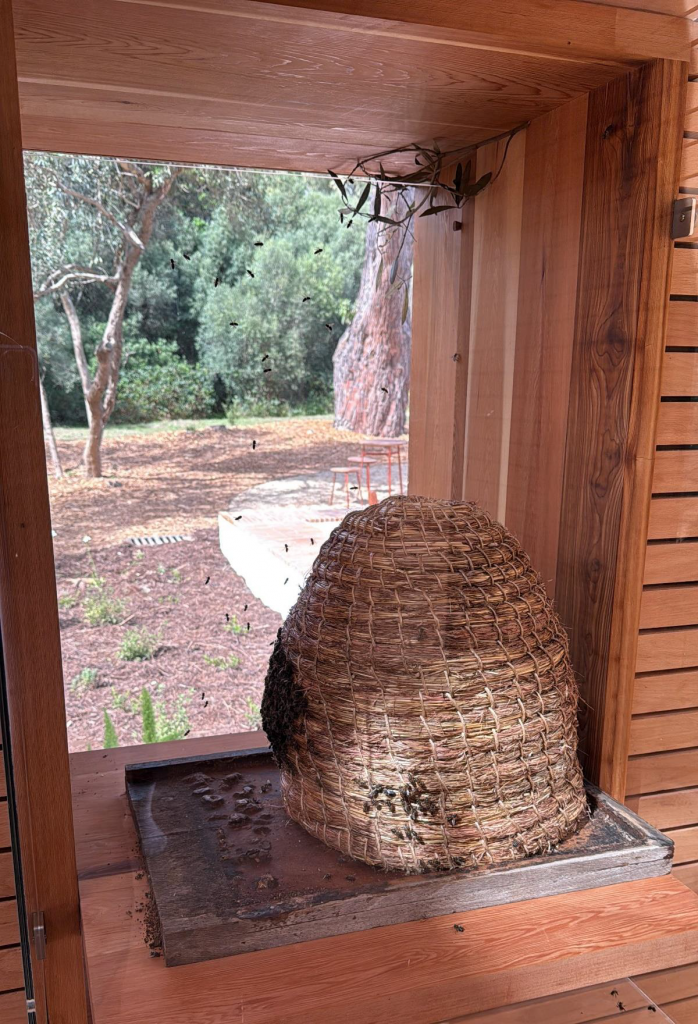
Log hive
This Log hive has been interesting from the start. The oak log was donated by Klaas van der Wal. Hendrik’s carpentry skills helped me to turn this log into a real hive. We created two openings and I used propolis to reduce the size of the openings, and to give it a more natural look. Louis from Babylonstoren’s maintenance team made a lid and planks for the hanging combs. I used nails to put through the planks and gave them an elbow bend. With the L-shaped nails, it was easy to hang the combs by sticking them through the nails.
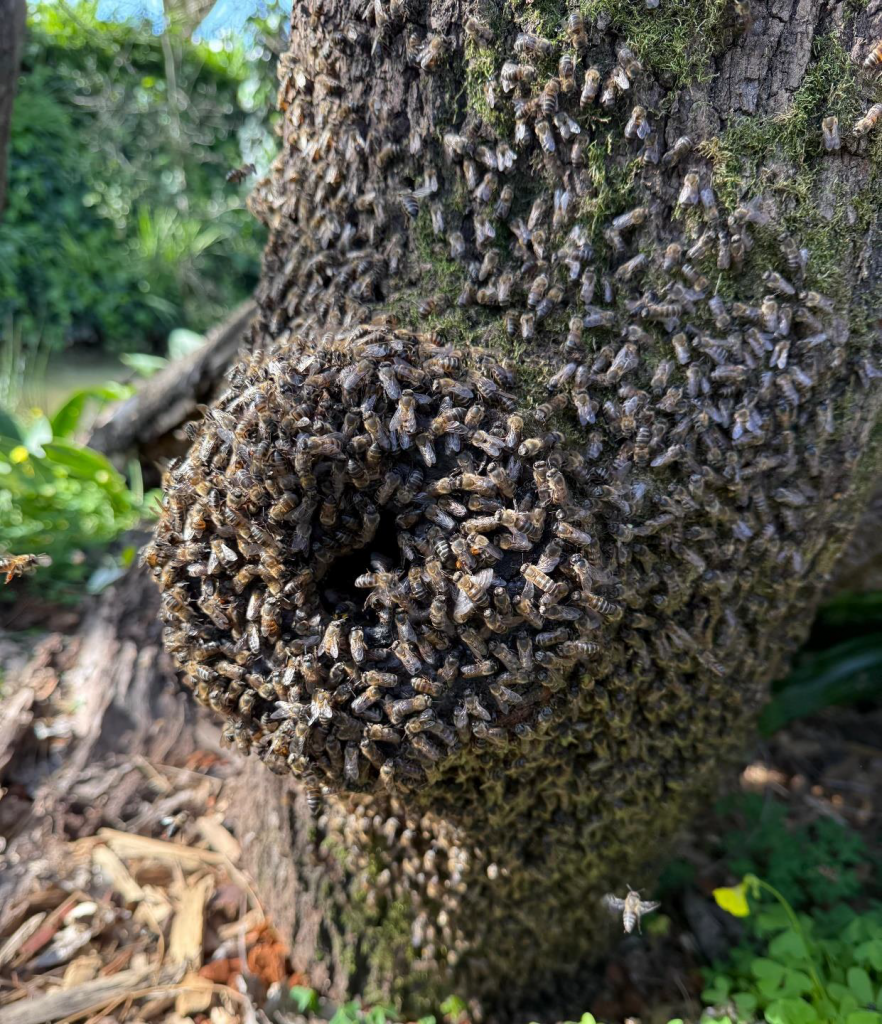
It made sense to find a swarm which was already inside an oak tree, because the combs would already be long vertical combs which I needed for this hive. We found a swarm inside a tree that posed a potential risk to guests as its entrance was the height of an average person and the direction of the entrance was in the way of where guests walk by. That means that guests walking past the hive are directly in their line of flight. The blue arrow in the photo below shows the level of the entrance.
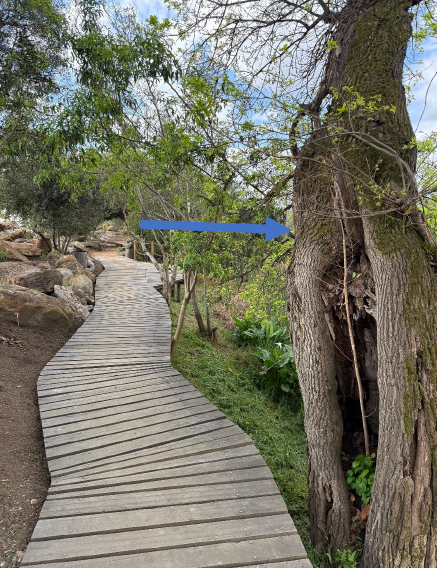
André from Agri-Tree Services helped cut the tree which was also a safety hazard as it was already broken. With the possibility of strong winds, the remaining top could fall. One of our students, Carrissa, also joined as she was quite keen to learn.
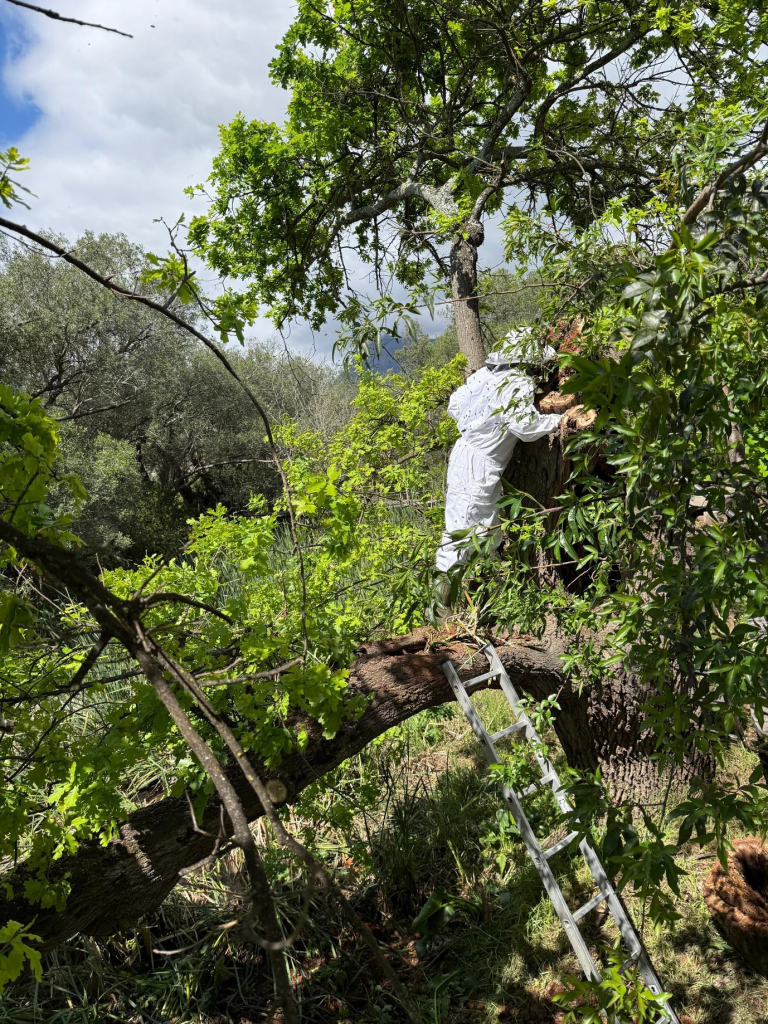
When we reached the combs by cutting from the top down, I got on the ladder and took the combs out gently and placed them on the ground. I had to cut the brood combs so that they could fit inside the log. Then, I hanged them on the nails and could put the planks in their positions.
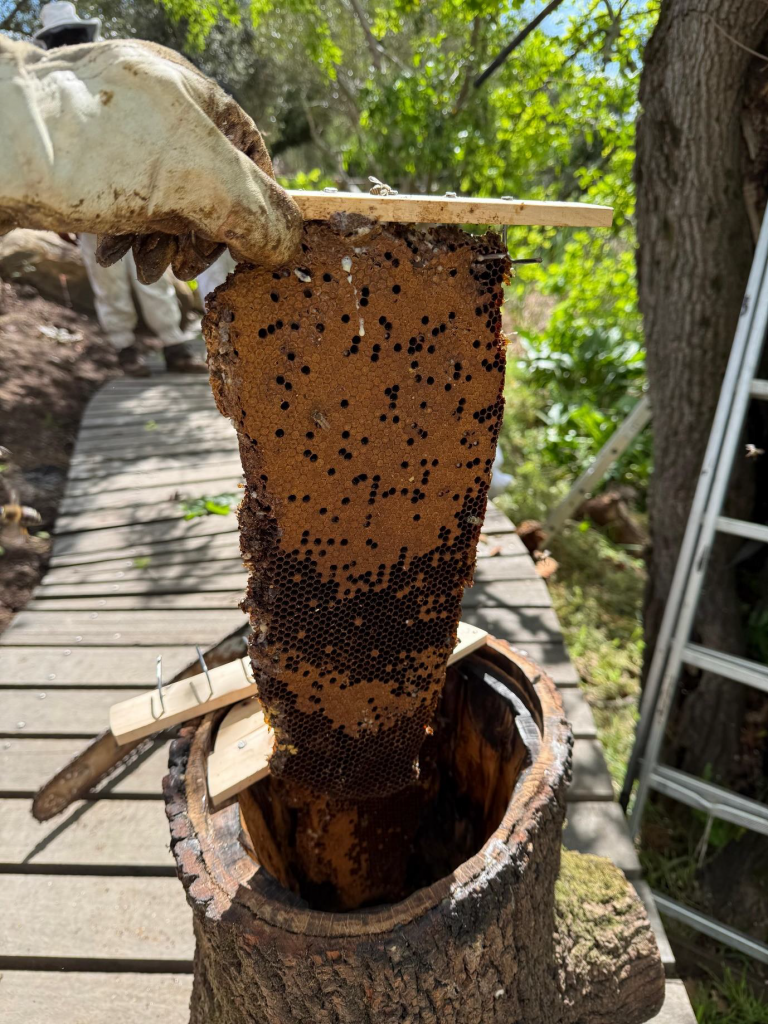
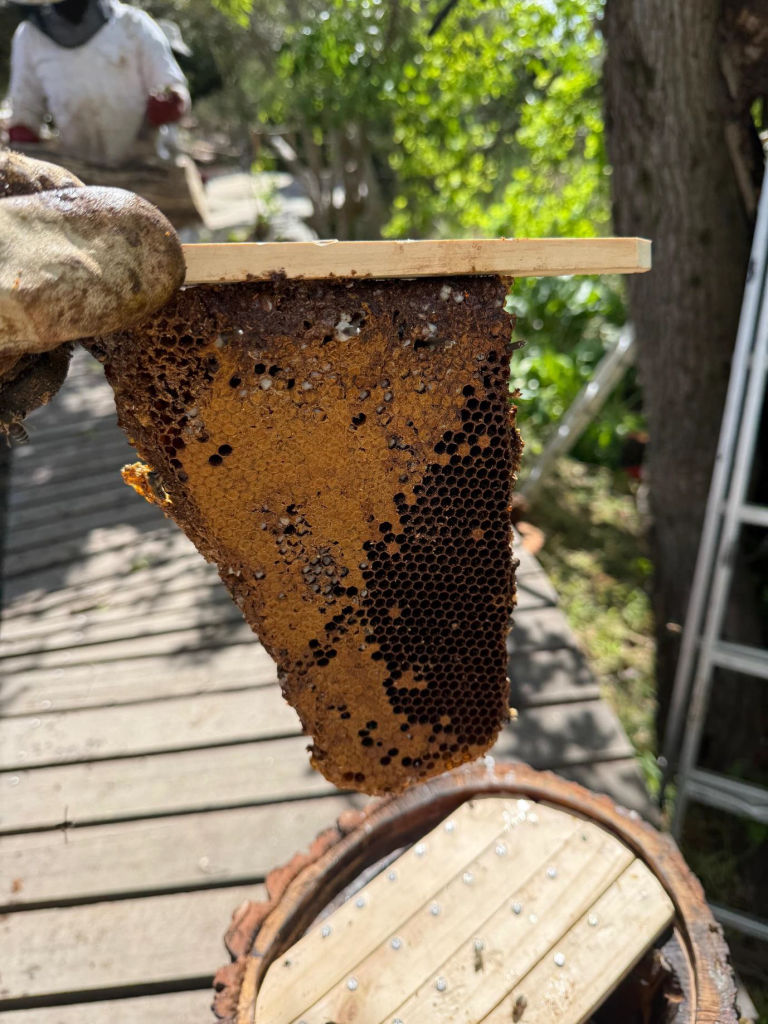
I took the swarm to the Byzantium immediately, as it was not ideal to keep the hive on a walking path. To my disappointment, the next morning the swarm was gone. It’s possible that the queen was inside but managed to escape even before I took the hive to the Byzantium. I looked for any clusters of bees in the surrounding area but did not see anything. However, I was determined to try again, and I knew of another swarm inside an old fallen oak tree in the bulb garden, past the cycad garden. It was also close to a foot path, and the bees’ flight line was crossing the path. The combs were accessible and I could remove all the combs from the trunk.
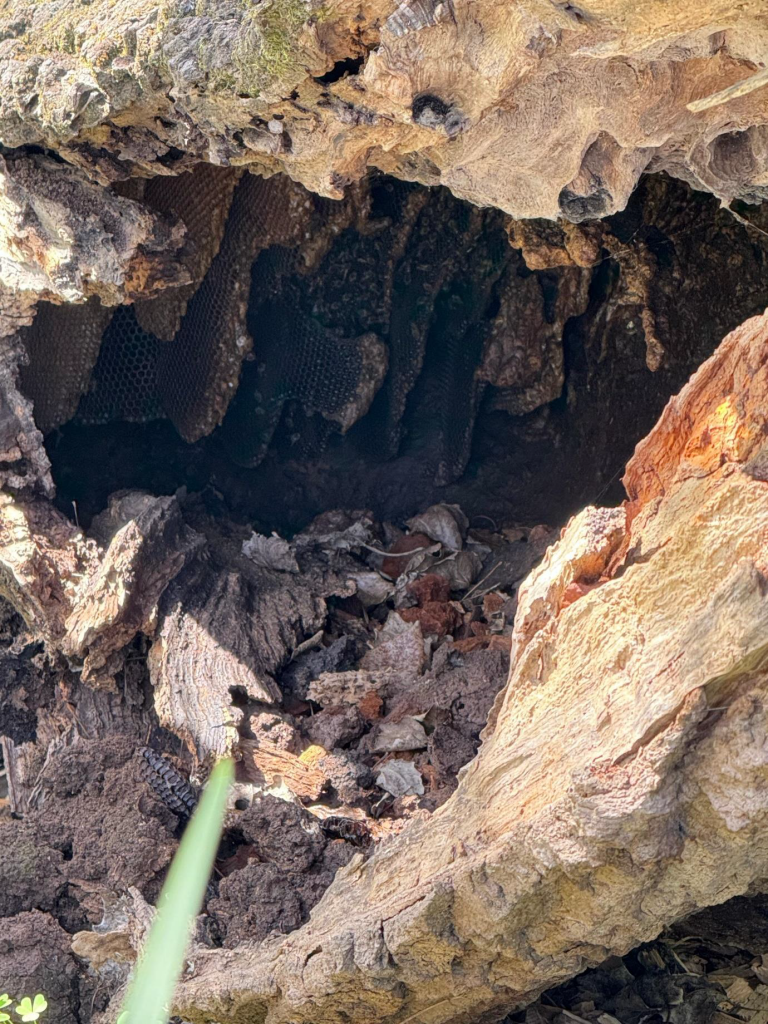
I had to cut their brood combs and hang them inside the log hive. It was relatively easy to do this as it was the second attempt. I was lucky enough to spot the queen and put her in front of the entrance. When she walked in, the bees started following her inside. I took a piece of wax comb to close the viewing window. I did not want to confuse them with more light.
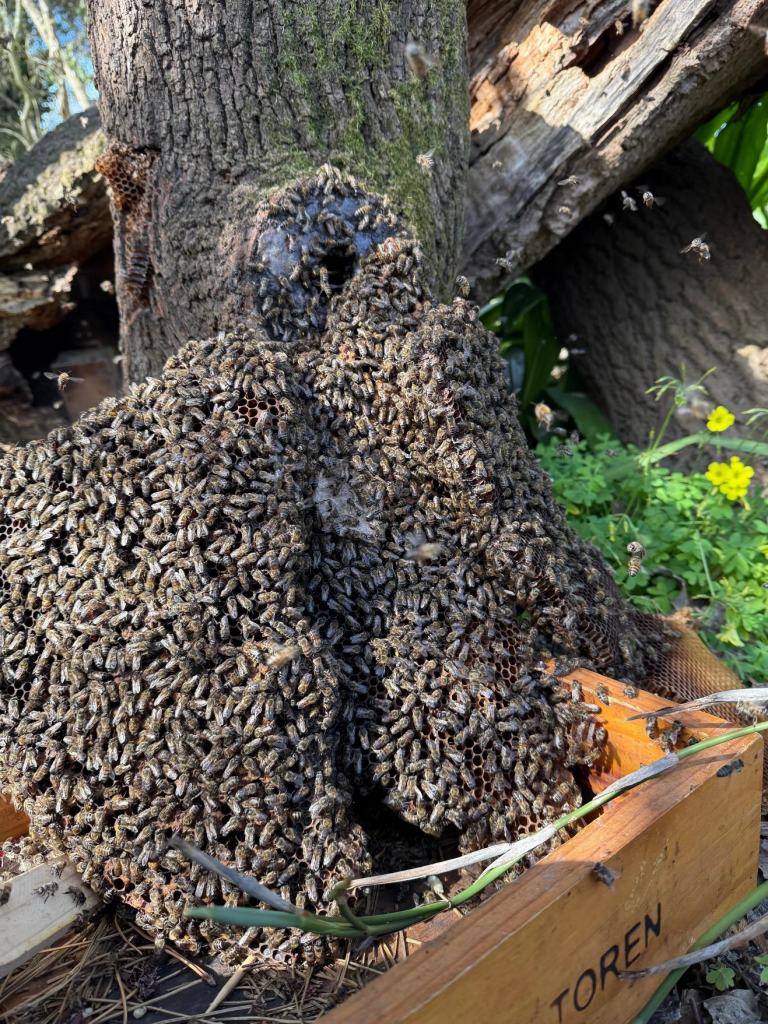
I turned the hive in position so that the entrance faced the same way the field bees left the oak tree.
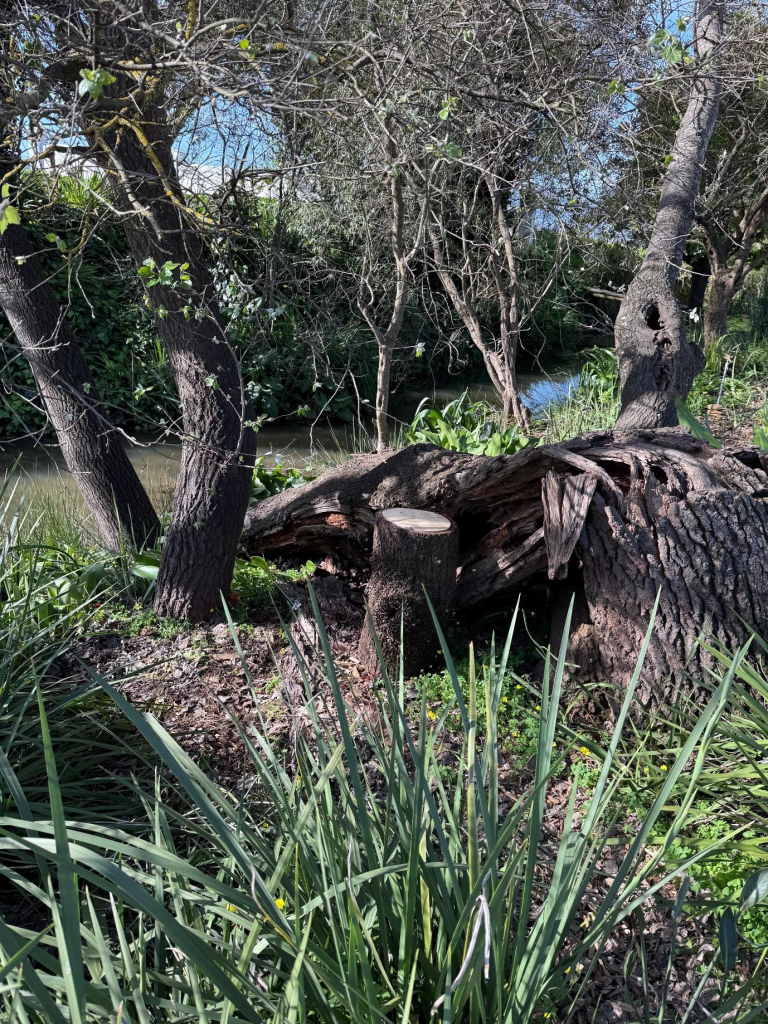
I gave them a week before taking them to the Byzantium. I wanted them to settle properly before moving them. Again, it was worthwhile to give them time. The swarm has been very active from the start. They are doing so well that there is a good chance that they will split soon. Sometimes when there is not a lot of bees walking over the viewing window, you can see the snow-white comb with capped honey.
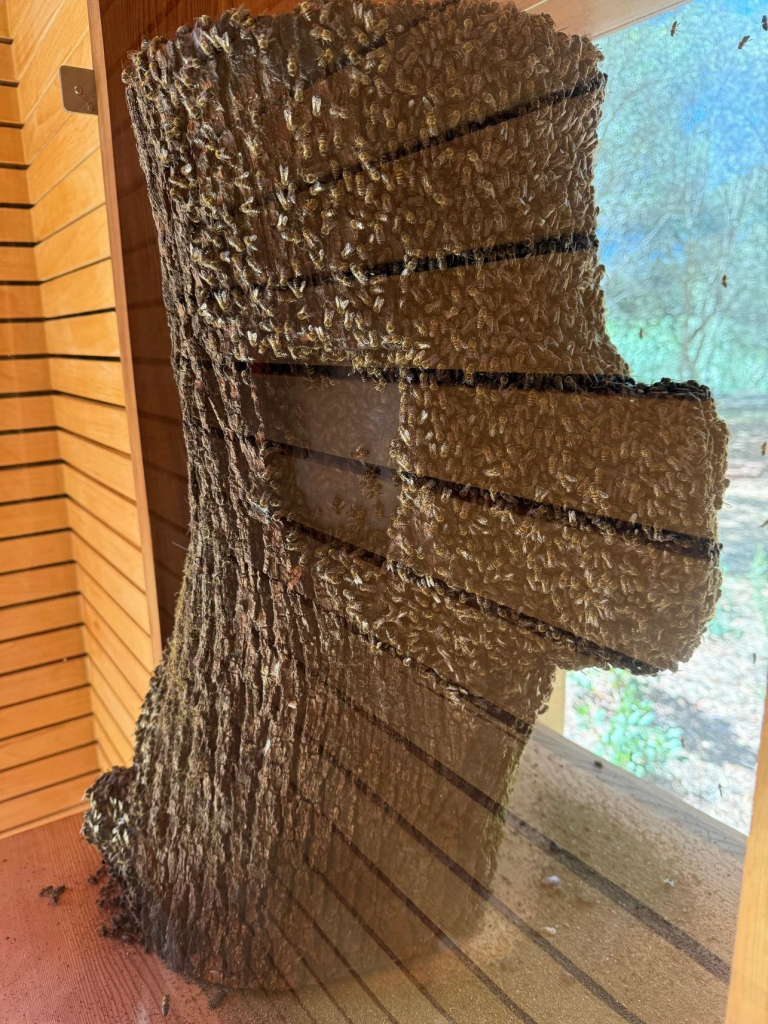
Now, especially with the warmer temperatures, you can smell the honey from inside the Byzantium. When you stand in the corner, to the left of the Perspex box, you get the strong honey smell. It could be due to the small entrance at the back of the hive where the smell is strong.
Something we couldn’t foretell was how the swarms would manage with the glass panel where they would exit and enter. The photo below shows a lot of dead bees in front of the glass panel. They struggled to find their way out and over-exhausted themselves in the process. Think about a windowsill at home. If a bee is found on the inside of your window, she will try to get out by walking up and then dropping to the bottom. This will happen repeatedly and then she is tired, her energy being depleted.
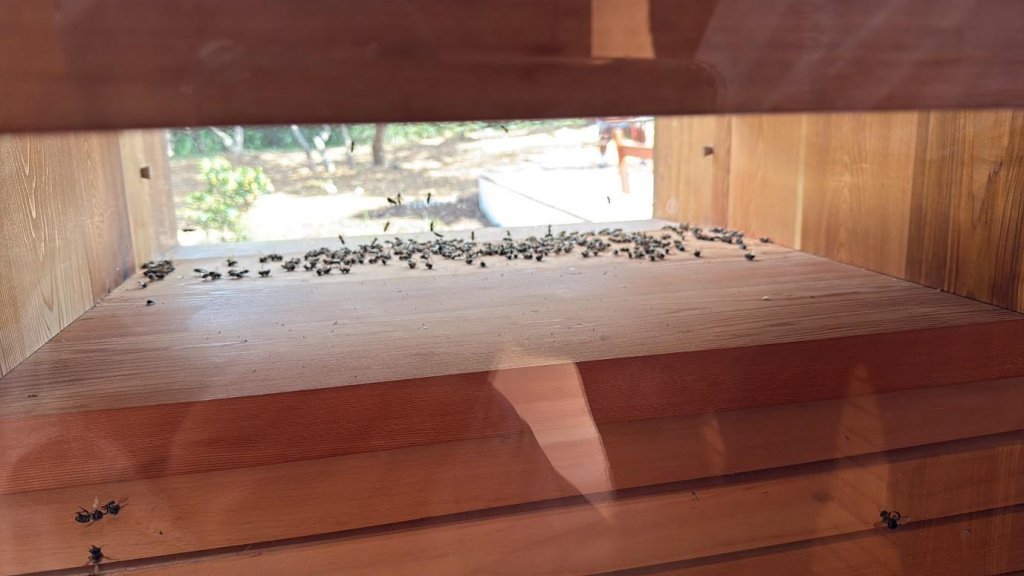
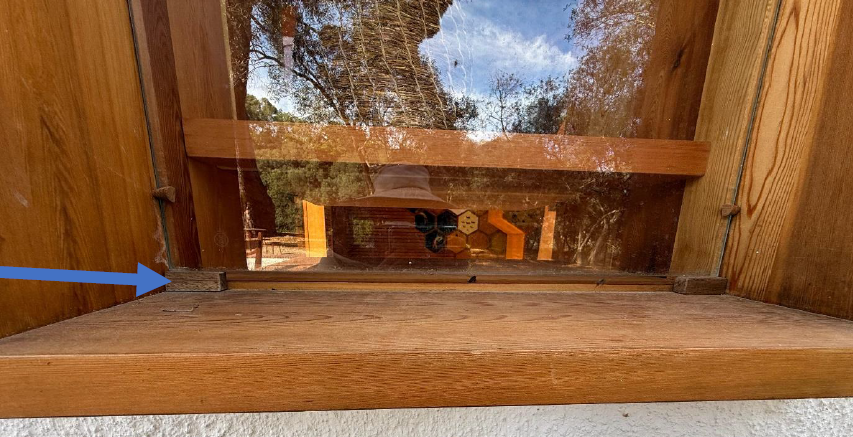
It was therefore necessary to give them an additional gap at the bottom. I got four wooden blocks from Jaco, Babylonstoren’s maintenance team. Back at the Byzantium, I lifted the glass panels and placed the spacing blocks underneath. It proved to be very effective. The next morning there were much fewer dead bees. The bees started exiting and entering the space by using both gaps. The blue arrow shows the the bottom gap for the bees to exit the Byzantium.
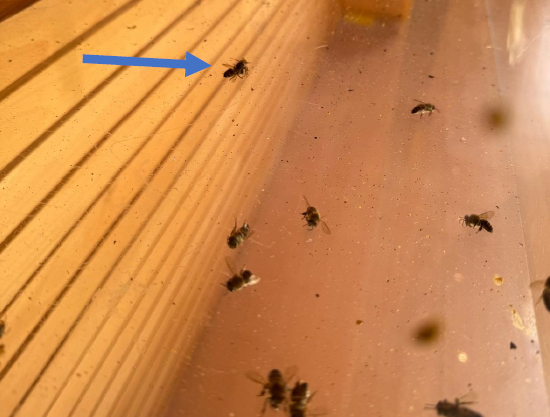
Every morning there are dead bees inside the cavity, on the Perspex box, but later the dead bees are all gone. They are removed by the “undertakers”. This phenomenon shows how hygienic bees are. Disposing dead bees from the hive ensures fewer pests and pathogens. The blue arrow shows a live bee dragging a dead bee. The early guests can see the difference and observe the work of the undertakers.
Afternoon visitors will be able to observe the orientation flights of the new bees at the hives. This usually happens between 14h00 and 15h30. I am pleased with the three observation swarms. It will be interesting to see how their activity will change towards the winter.
Apiary work
I have added supers to the hives and harvested a little bit of honey. However, I am now waiting for the Eucalyptus season which will result in a higher nectar flow. There are signs of honey in the hives, but not much capped honey yet.
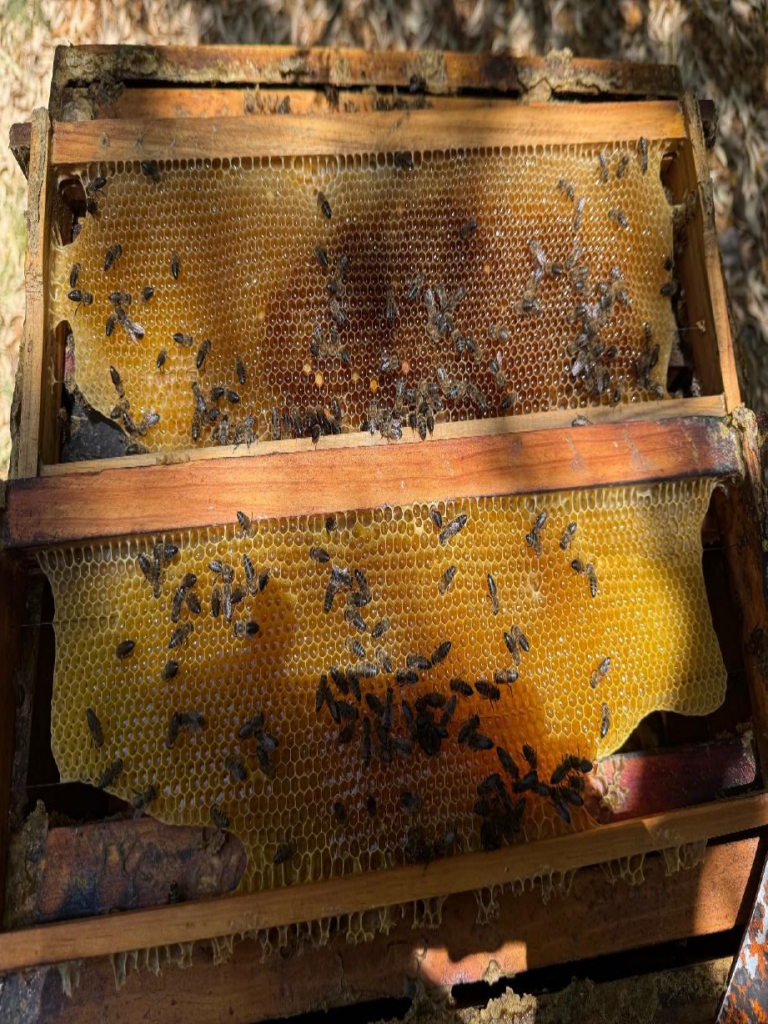
I caught a small moving swarm at my residence earlier in the spring. The swarm was about the size of a cricket ball. Thus, I put them inside a nuc (nucleus colony) hive, half the size of a standard Langstroth hive.
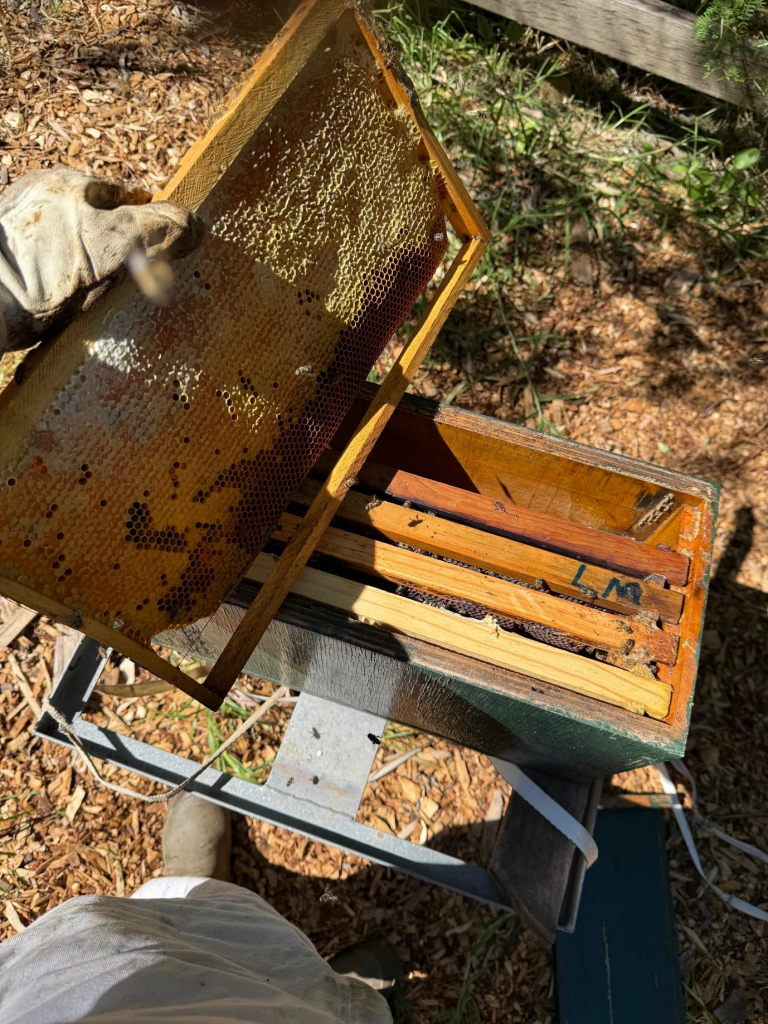
This swarm was one of my favorite swarms during my workshops, because it was easy to find the queen bee. Guests are always in awe when they can see the queen. And so am I, to be honest. The swarm has been doing quite well, and I gave them two decent frames of honey which I got from my “helping swarm” as I had to replace the two frames with the custom-made frames of the observation hive. This gave them a huge advantage. The photo below shows one of the honey frames I added to the hive. As all five frames were built with comb, I transferred them to a standard hive. I gave them five full wax sheet frames and now they can continue to build on these frames before winter. I doubt that they will get a super, but the possibility remains. It all depends on the nectar flow.
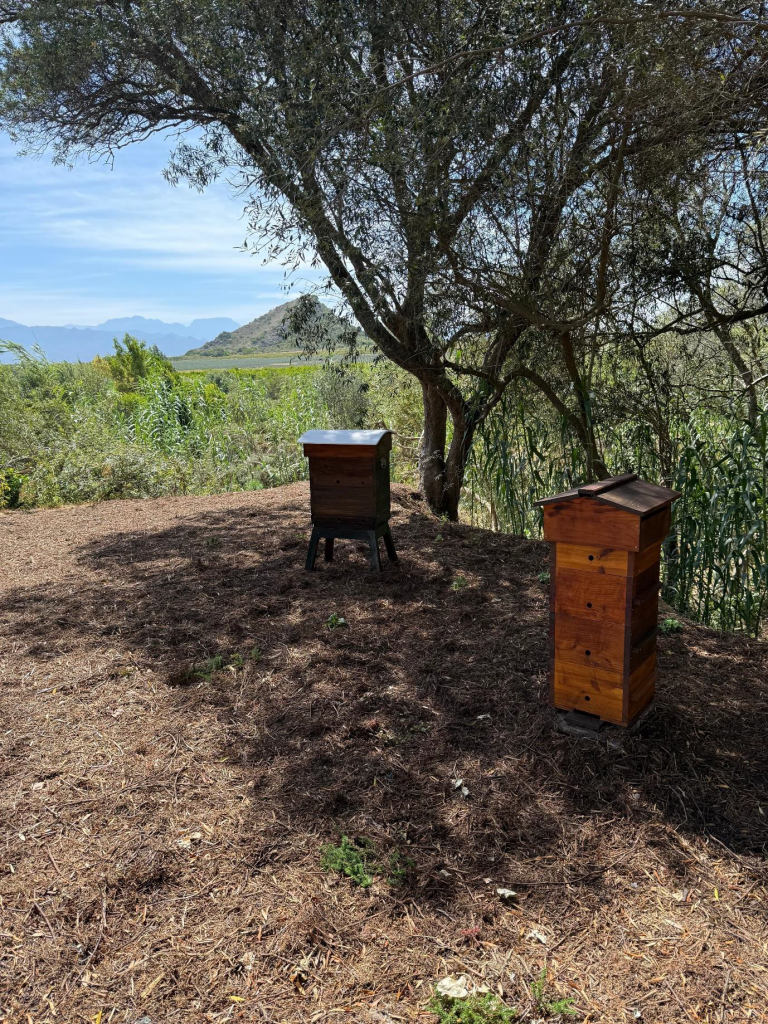
I also prepared the Warre hive and Golden Hive by treating them with Waksol oil. They are now on display, outside the Byzantium. The rest of the hives are now ready for the Eucalyptus season. I hope that the weather will play along. With a lot of heat waves, it could result in flower drop. This is something that happened a few years ago.
Flow of bee workshops
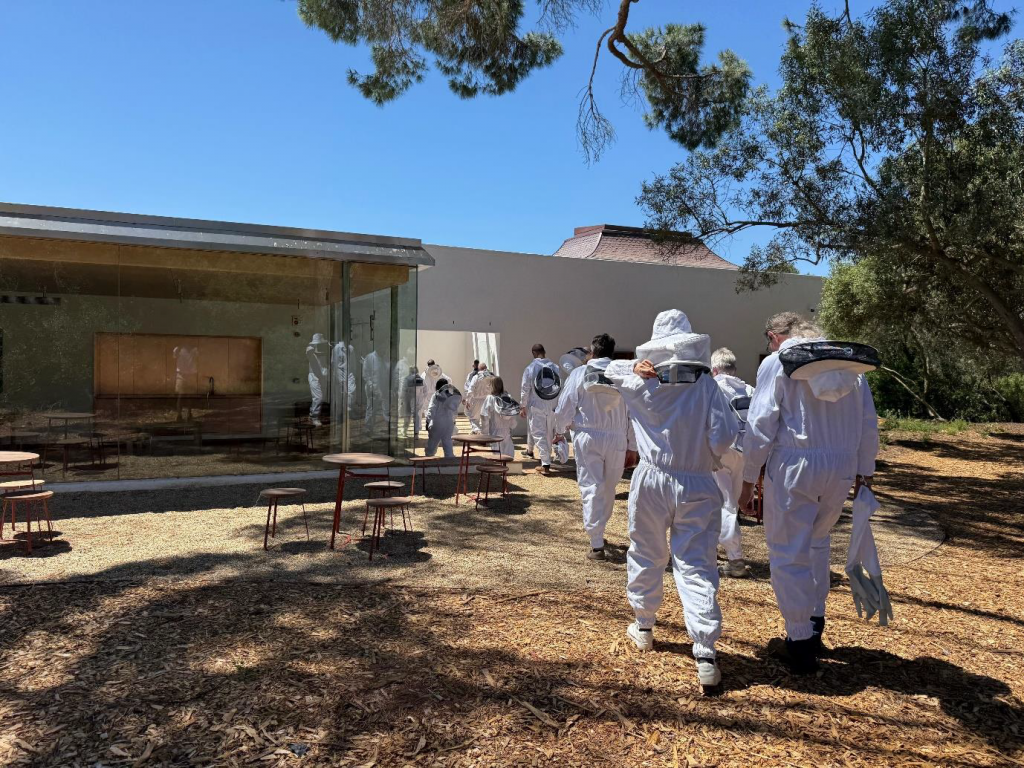
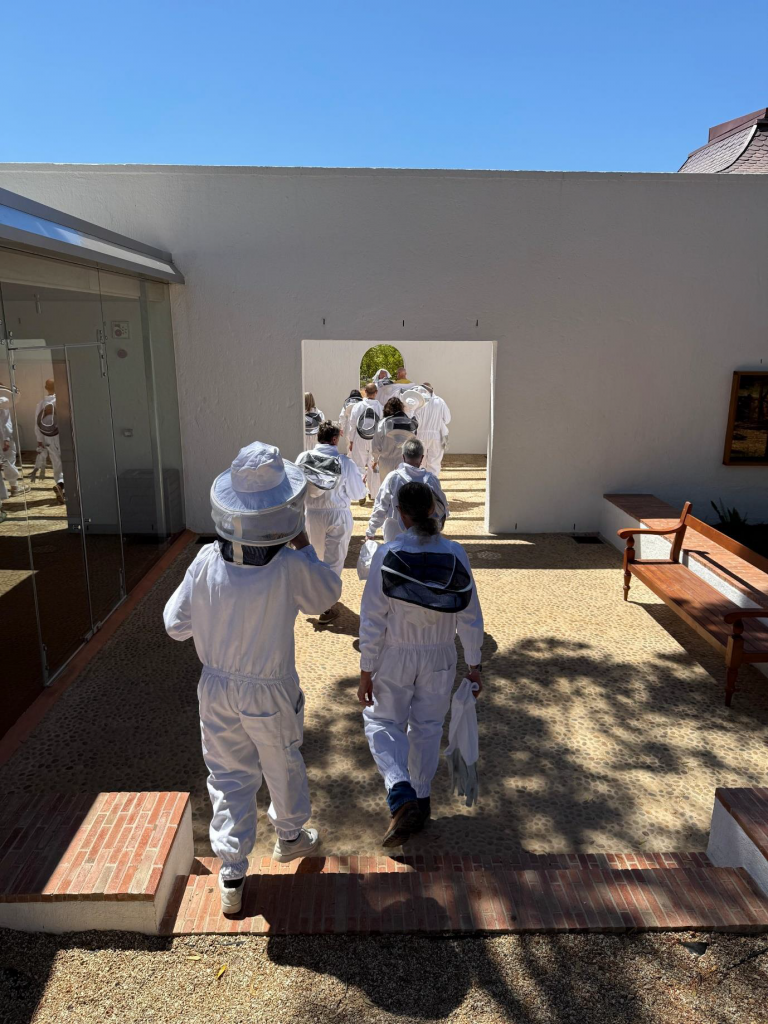
- The first image shows our return to the Byzantium from the apiary.
- Moving through the courtyard in our identical bee suits.
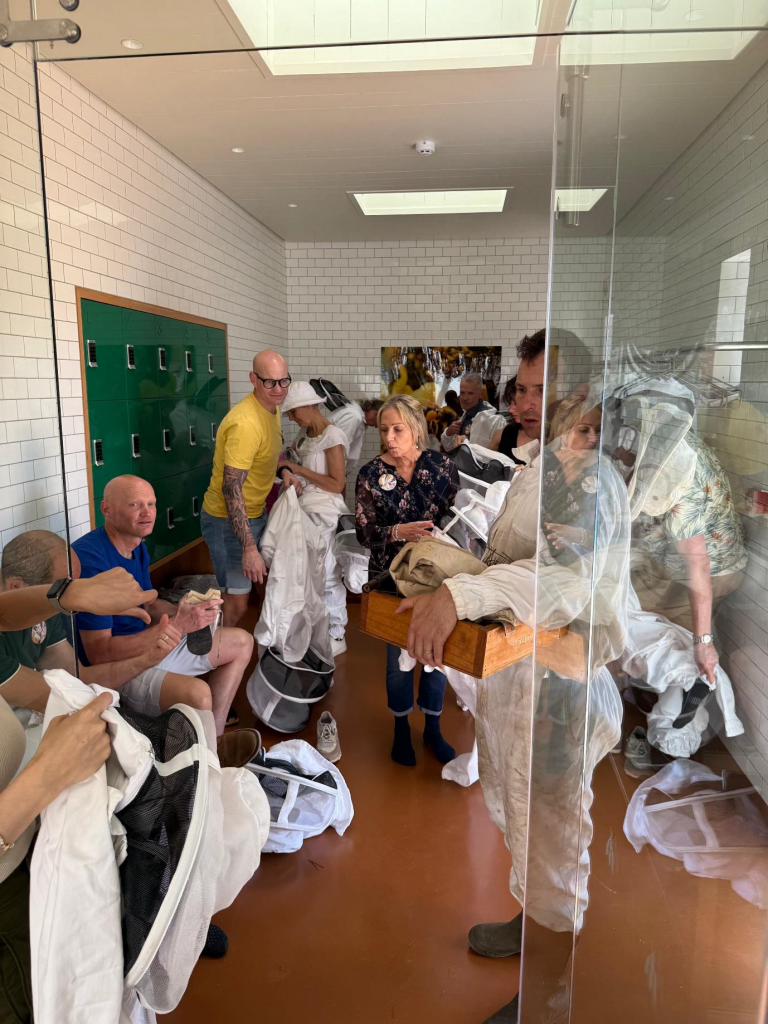
- Everyone enjoys the refreshing cool air in the dressing room. The lockers work fantastic for guests to store their personal belongings.
BUZZ WORDS
Super - Any hive body, usually a smaller box, used for the storage of honey which the beekeeper intends to harvest. Normally it is placed above the brood chamber(s). Supers are typically medium or shallow-sized boxes.
Apiary - Colonies, hives, and other equipment assembled in one location for beekeeping operations.
Beehive - An artificial cavity for a bee colony to live in, usually a box or boxes with movable frames.
Brood - Immature bees that are still inside their cells. Brood can be in the form of eggs, larvae, or pupae of different ages.
Capped honey – When bees cover their honey with wax, much like putting a lid on it.
Nuc – A nuc, or nucleus colony, is a small honeybee colony created from larger colonies, packages, or captured swarms.
Bee bread – Also known as bee pollen or ambrosia, is a ball or pellet of field-gathered flower pollen packed by worker honeybees and used as the primary food source for the hive. It consists of simple sugars, protein, minerals and vitamins, fatty acids, and a small percentage of other components.
Queen - A female bee with a fully developed reproductive system. Larger and longer than a worker bee.